
As September 1 approaches, when traffic flows increase significantly on the roads and extremely heavy traffic jams are forming in cities, the Emergency Medical Service (GMPT) invites all road users to be especially careful and responsible. Emergency medical aid (EMS) vehicles that go to emergency medical calls every day must reach patients as soon as possible, but even when driving with special light and sound signals activated, there are still risks in traffic.
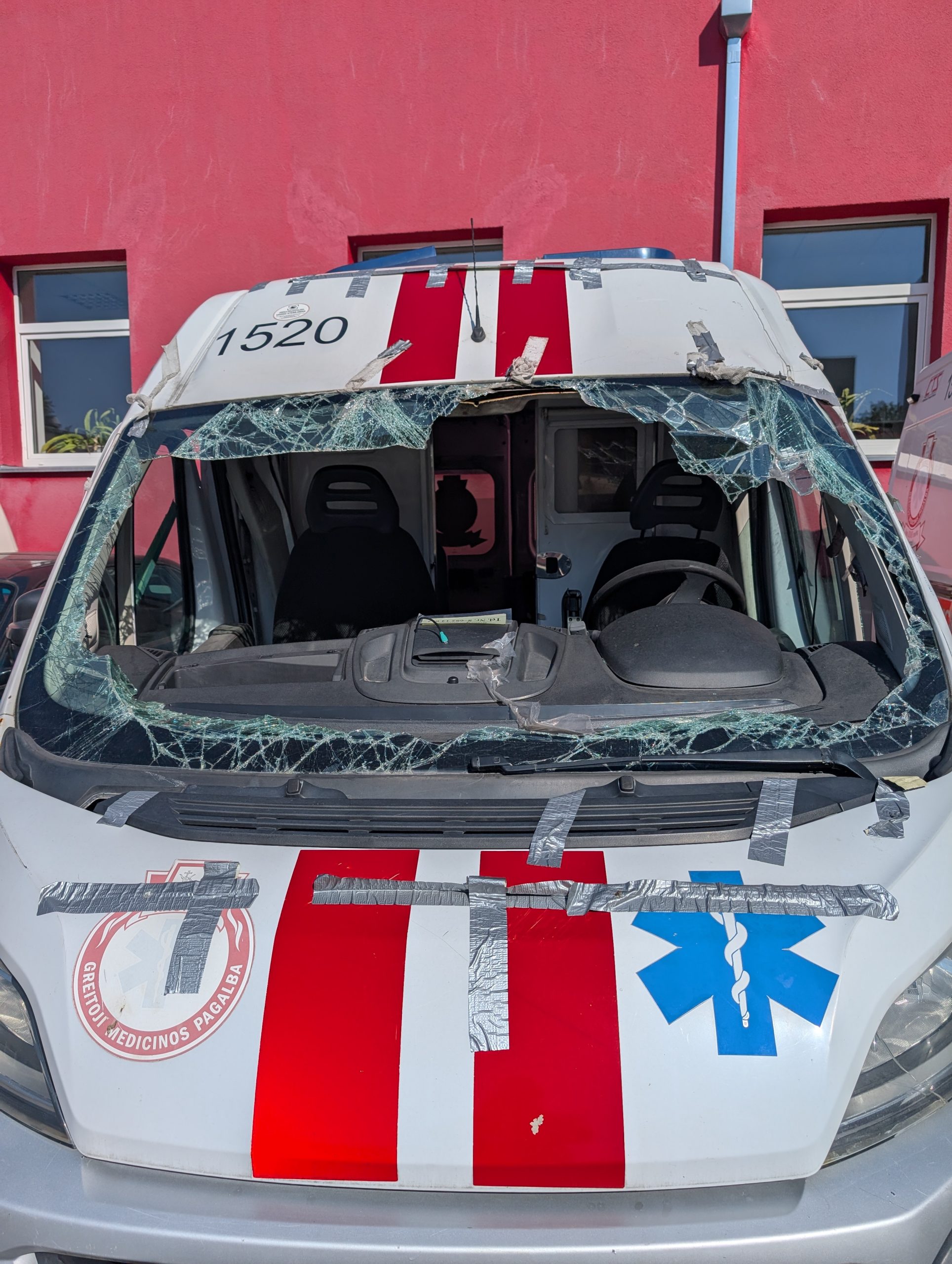
During the first seven months of this year, the GMPT recorded as many as 159 insurance traffic accidents involving the cars of the service. The range of accidents is extremely wide - from light body damage, side and rear doors to a completely damaged car. Most often, GMP vehicles are subjected to body damage.
The most painful events occur when the GMP car is driving with special light and sound signals on at intersections when the red light is on, or when leaving the main road.
"Special light and sound signals are not a guarantee that all the surrounding road users can see and hear us. Therefore, even when driving with activated signals, the GMP driver must make sure that he is given the road safely. However, the behavior of other drivers is also very important - if you notice or hear ambulance, you need not only to know the rules of the road, but also to make it possible for him to pass safely," says Tomas Vasiliauskas, deputy director of GMPT for infrastructure.
Drivers of an ambulance may not notice an ambulance for various reasons: intense traffic, extraneous noise, music in the car, using the phone or simply insufficient attention to the environment.
Always rushing with a reason
Sometimes dangerous situations also arise due to the false belief that the driver of a special vehicle must in any case stop completely and make sure that the road is clear. However, this approach can be dangerous. The use of special signals means that the GMP crew goes to an emergency call or transports the patient, so every second lost can be significant.
The service emphasizes that road safety is a mutual responsibility. GMP drivers must act with maximum caution, while other drivers must spot the special vehicle in time, assess the situation and safely enable it to pass.
"We want to remind you of a very simple thing: an ambulance is never in a hurry without a reason. There is a person behind the wheel who goes to help another person. That patient can be your loved one, child, neighbor or colleague. And no one can guarantee that you will not become a patient next time. himself. Therefore, the most important thing on the road is not to win a few seconds, but to preserve a person's life and health," says Ilona Kajokaitė, Deputy Director of the Service for Medicine.
Not only cars are injured in accidents, but GMP workers are also injured. Such cases are not unique. In May of this year, a passenger car in Telšiai rammed the GMP crew - two paramedics were injured. In July, a GMP car and a light vehicle collided with the beacons in Alytus - the GMP driver was injured. This year, at least several cases were recorded in Vilnius when employees of the service were injured during the year of traffic accidents.
GMP workers injured in traffic accidents cannot work for some time and provide assistance to patients, their replacement colleagues have a higher workload.
How to skip special transport
In order to minimize road accidents, we remind you of the basic principles of how to behave on the road when you measure an GMP car with beacons:
GMP cars are not only a working tool - they are specialized and expensive vehicles, the damage of which has a direct impact on the ability of the service to provide assistance to the population. The value of the newly put into operation GMP car is about 135 thousand. Eur. A damaged car can be temporarily removed from work, and its repair or replacement means not only financial costs, but also lower service capacity.
The National Emergency Medical Service was established in 2023. on July 1, by combining the previously self-functioning 16 GMP stations, 30 primary health care centers and 2 private GMP institutions. A total of just over 2,800 employees work in the service. GMP provides assistance by the general emergency number 112, medical consultations - by telephone number 113.
To call an ambulance, call the short number 112 or 113. You can find the contacts of the administration and departments by clicking on the link below.