
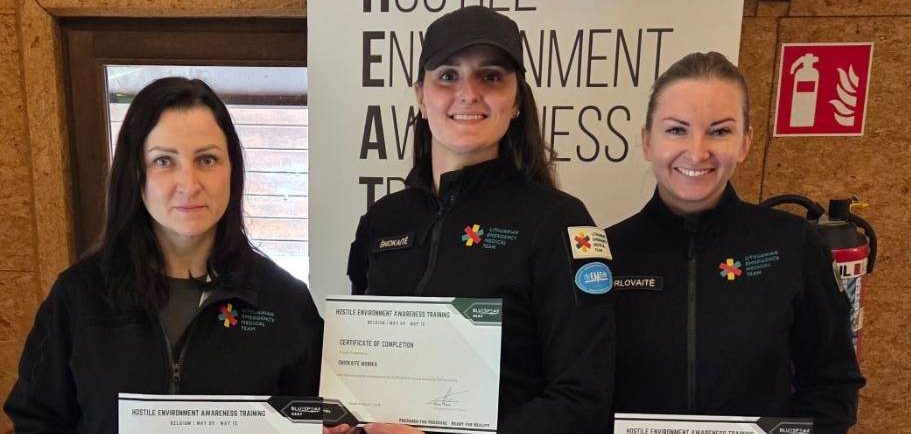
Many envision the work of an emergency doctor as a fight for life in sterile hospital wards or ambulances. However, there are places in the world where medical rules change and security becomes a luxury. In order to prepare for this, the members of the Lithuanian mobile emergency medical team participated HEAT (Hostile Environment Awareness Training) in training in Belgium.
It wasn't a simple exercise - it was a four-day psychological and physical exam where the line between simulation and reality was erased as soon as you cross the "conflict zone".
When naivety ends outside the first firewall
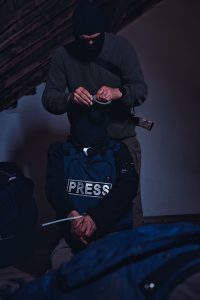
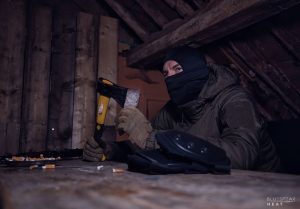
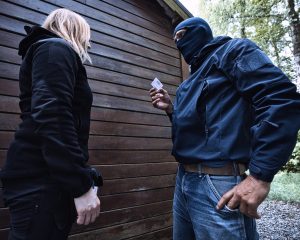
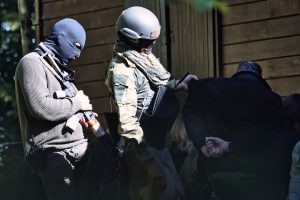
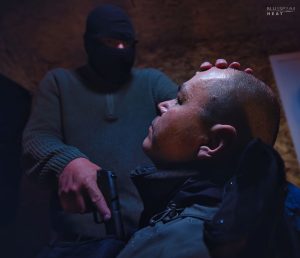
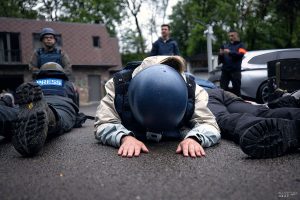
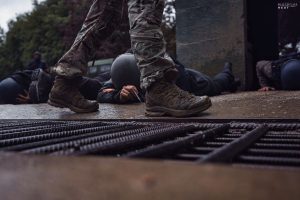
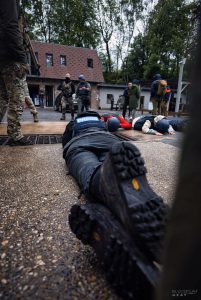
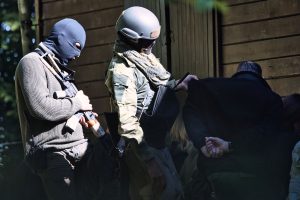
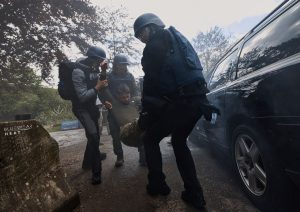
The training started without introductions. As soon as we reached the place of the exercise, we were not greeted by instructors with notebooks, but by armed men hiding their faces under masks. The first arrest, kneeling facing the wall, and strict commands instantly dispelled any academic disposition.
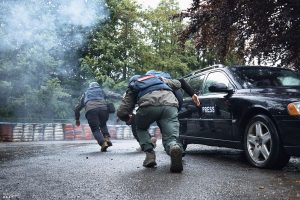
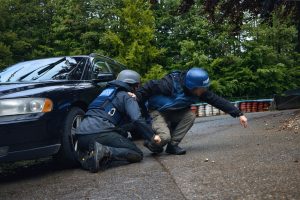
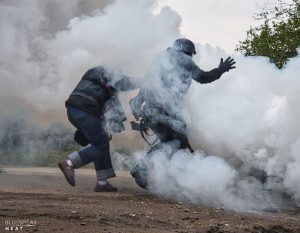
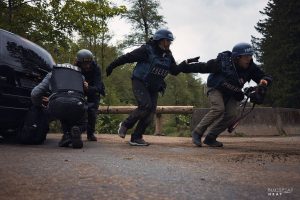
"These experiences made us rethink our values and that healthy naivety that we, as doctors or humanitarian aid providers, are always safe," says Eglė. The first day taught us the essential rules of survival: how to evacuate from a shelled car in seconds, how to recognize minefields and what a vital role "fixers" play - local wizards to help you maneuver between neutral, friendly, and sometimes and hostile groups.
Medicine in a "gray area"
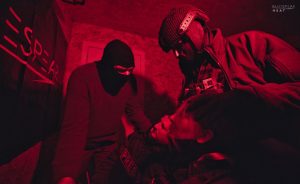
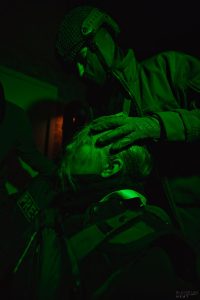
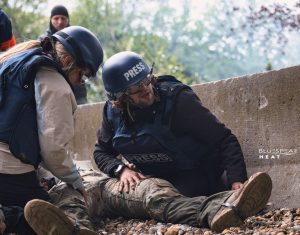
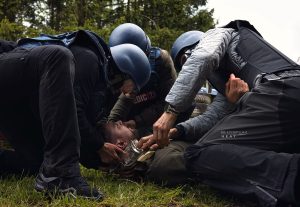
The second and third days were devoted to tactical medicine. Although the provision of help in various conditions and medical algorithms are not new, the theory and much of the MARCHE algorithm practice provided new knowledge and a new perspective on the provision of assistance in an unsafe environment, to apply it in the background with explosions echoing, drones flying overhead or Suffocating under a heavy protective vest is something else entirely.
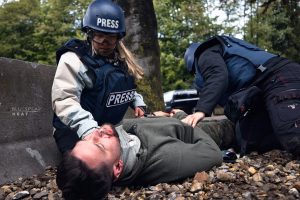
We learned to improvise: make stretchers from branches found in the forest, stop massive bleeding in the mud and smoke. One remembers a lesson that we learned during the simulation in the most painful way: "During one of the drone attacks, we gave in to our emotions and started to provide help in an open meadow. It was a mistake. In a dangerous environment, you must first take care of your safety so that you can save others later. We learned this lesson quickly."
Psychological endurance and the art of negotiation
The fourth day was the climax. She did not test our medical knowledge, but her ability to remain human in inhumane conditions. Arrests, interrogations and attempts to extract information required enormous emotional control.
One of the most memorable moments is the negotiations with the leader of the local armed group. The confrontation with the "commander" of an unpredictable mood, with armed guards standing behind, showed that the word in emergency help can be as important as a scalpel or a tourniquet. The ability to negotiate a safe corridor to complete the mission was an essential element of our "survival".
Why is it important?
We came back different. These trainings provided not only basic knowledge about threats or drone attacks, but also an invaluable psychological backbone. As part of a mobile team, we are now better prepared to operate where help is most needed, but the conditions are changing and potentially dangerous for aid providers.
HEAT training is a reminder that the professionalism of a doctor is measured not only by a successful procedure, but also by the ability to keep a cool head when there is chaos around. We are better prepared to accept the challenges because now we know: safety starts with preparation, and preparation starts with the courage to face reality.
The publication was prepared as part of the project "Increasing the capacity of the Lithuanian Mobile Emergency Medical Team" partially financed by the European Union, no. 101191020, ECPP-2024-LT-EMT1.

Funded by the Europos Union. However, the expressed view or opinion is only of the author(s) and this does not necessarily reflect the views or opinions of the Europos Union or the Europos Commission. Neither the Europos Union nor the granting authority can be held responsible for them.