
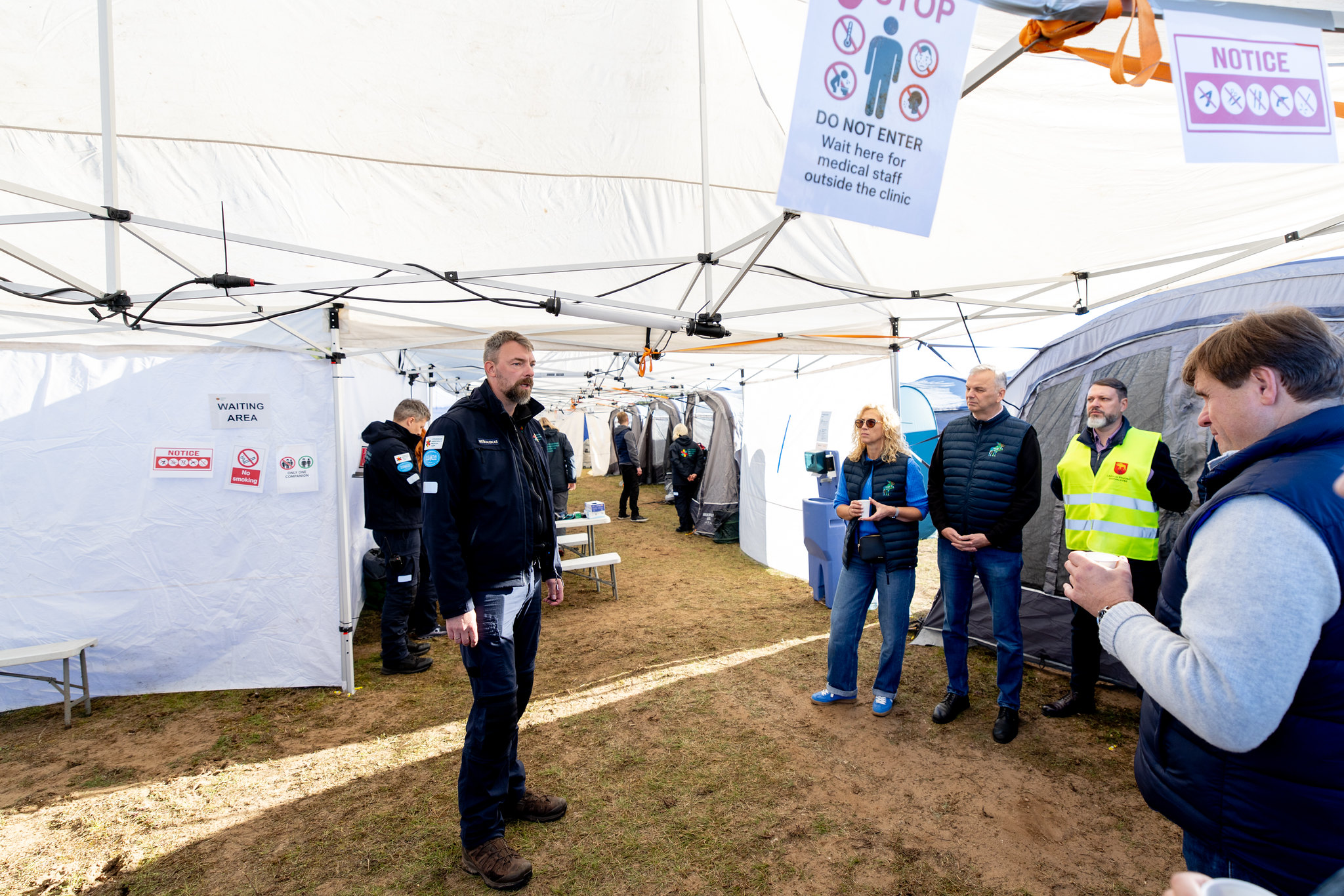
On October 1-4, the project "Increasing the capacity of the Lithuanian mobile emergency medical team" (No. 101191020, ECPP-2024-LT-EMT1) training program "Mobile 1 type of emergency medicine" was held. Support team training" Part II, which was attended by over 40 members and newcomers of the Lithuanian Mobile Emergency Medical Team (LEMT) – member candidates. During the training, the participants trained standard operational procedures and the principles and skills of quick departure, learned to establish a residential base and clinic, receive patients and provide assistance, coordinate actions with other institutions and support organizations.
The training was integrated into the national mobilization system inspection exercise "Vytis Skliautas 2026". The training tasks were not performed in an isolated environment, but in large-scale exercises, working together with other state institutions and organizations: in the final stage of the exercise on October 3. At the Lazdijai hippodrome, near the humanitarian aid camp, they stationed a field clinic capable of receiving more than 50 patients every day.
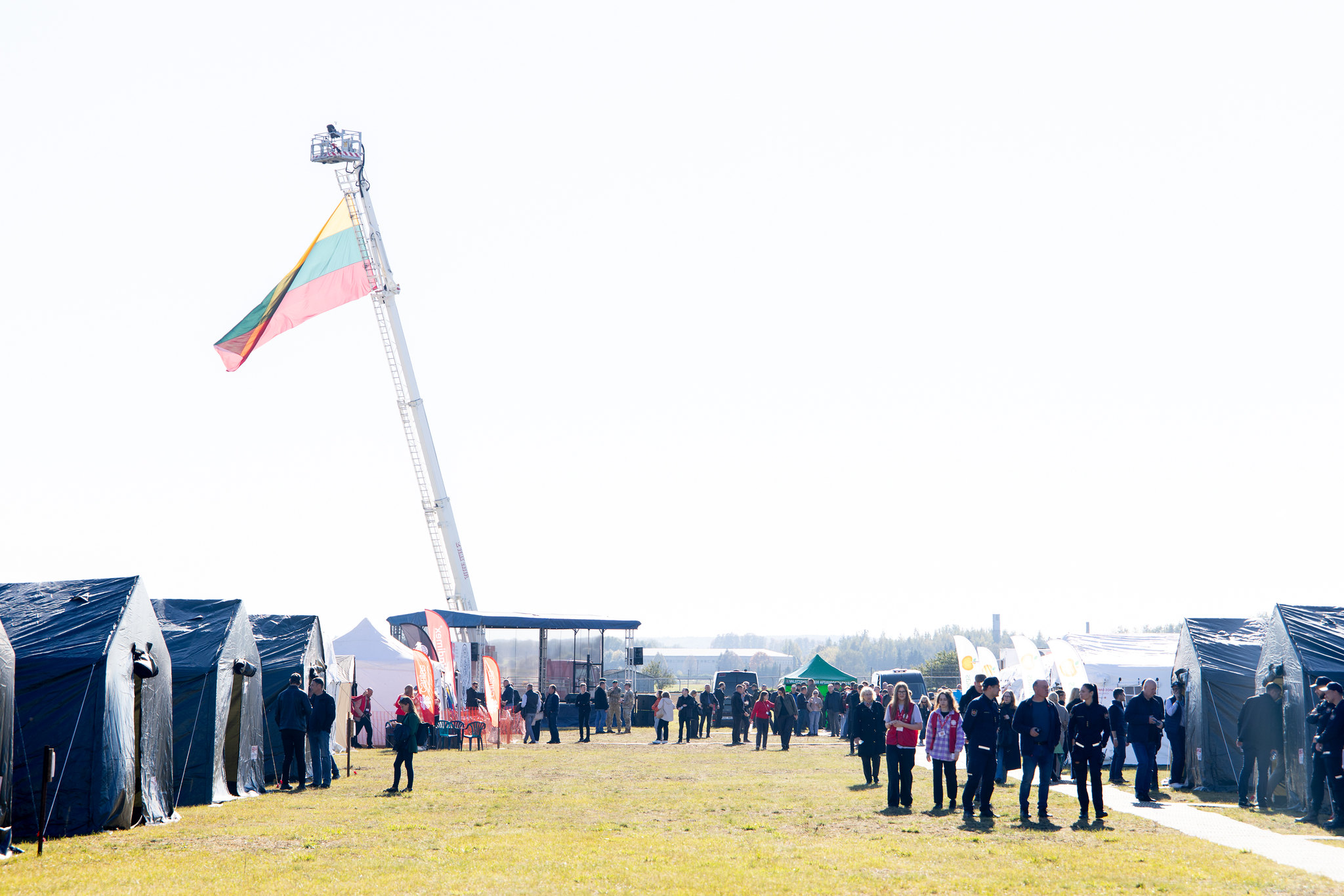 Educational humanitarian camp at Lazdijai Hippodrome. LRV photo.
"Vytis Skliautas 2026" is the largest annual inspection exercise of the Lithuanian national mobilization system, which took place from September 25 to October 3. They were organized by the National Crisis Management Center of the Government Chancellery and the Department of Mobilization and Civil Resistance under the Ministry of National Defense. All 14 ministries and 60 municipalities participated in the exercise - about 150 institutions in total, about 3 thousand. representatives of state and municipal institutions, companies and non-governmental organizations and about 1 thousand volunteers.
Combining table (TTX) and real action (LiveX) exercises, a gradual deterioration of the security situation was modeled according to a fictional, but current threat scenario: informational and cyber attacks, energy and communications disruptions, transport corridors disturbances and the increasing need for population evacuation. Participants tested the ability to ensure the continuity of health, social and other vital services, receive allied forces and distribute limited resources. During the exercise, the state reserve was activated for the first time - among the measures used were emergency medical teams and medications.
On the final day of the exercise, an educational humanitarian camp was set up at the Lazdijai Hippodrome, which according to the script was intended for residents who, due to alleged military aggression, to Poland, as well as to Lithuanian citizens. The camp consisted of about 90 tents, of which 20 were intended for medical aid - they housed the Lemt Field Hospital.
The team's task is to ensure the emergency and primary health care of all camp residents: to assess the condition of the arrivals, to decide whether the patient can be treated on the spot, whether it is necessary to refer to a treatment facility, and if necessary, to issue medications so that ambulances and hospitals are not burdened. In the field hospital, it is planned to perform primary care and minor surgical procedures - washing and sewing wounds, and similar interventions. The team also had diagnostic equipment: ultrasound machines, defibrillator monitors to make it easier and more accurate to assess patients' condition and complaints. If necessary for more detailed examination or treatment, patients would be referred to other personal health care facilities.
More than 40 team members and candidates worked in the camp. According to team manager Greta Beinaravičiūtė, the team would be able to serve all 500 potential camp residents, but the real need for medical assistance in such a camp would reach about 50-100 patients per day.
The program was supplemented by a four-hour ultrasound training (POCUS) course: during theoretical lectures and practical tasks, the team members strengthened the knowledge and skills needed to assess the patient's condition with an ultrasound machine. In addition, there were educational workshops on the provision of assistance in the event of a mass disaster.
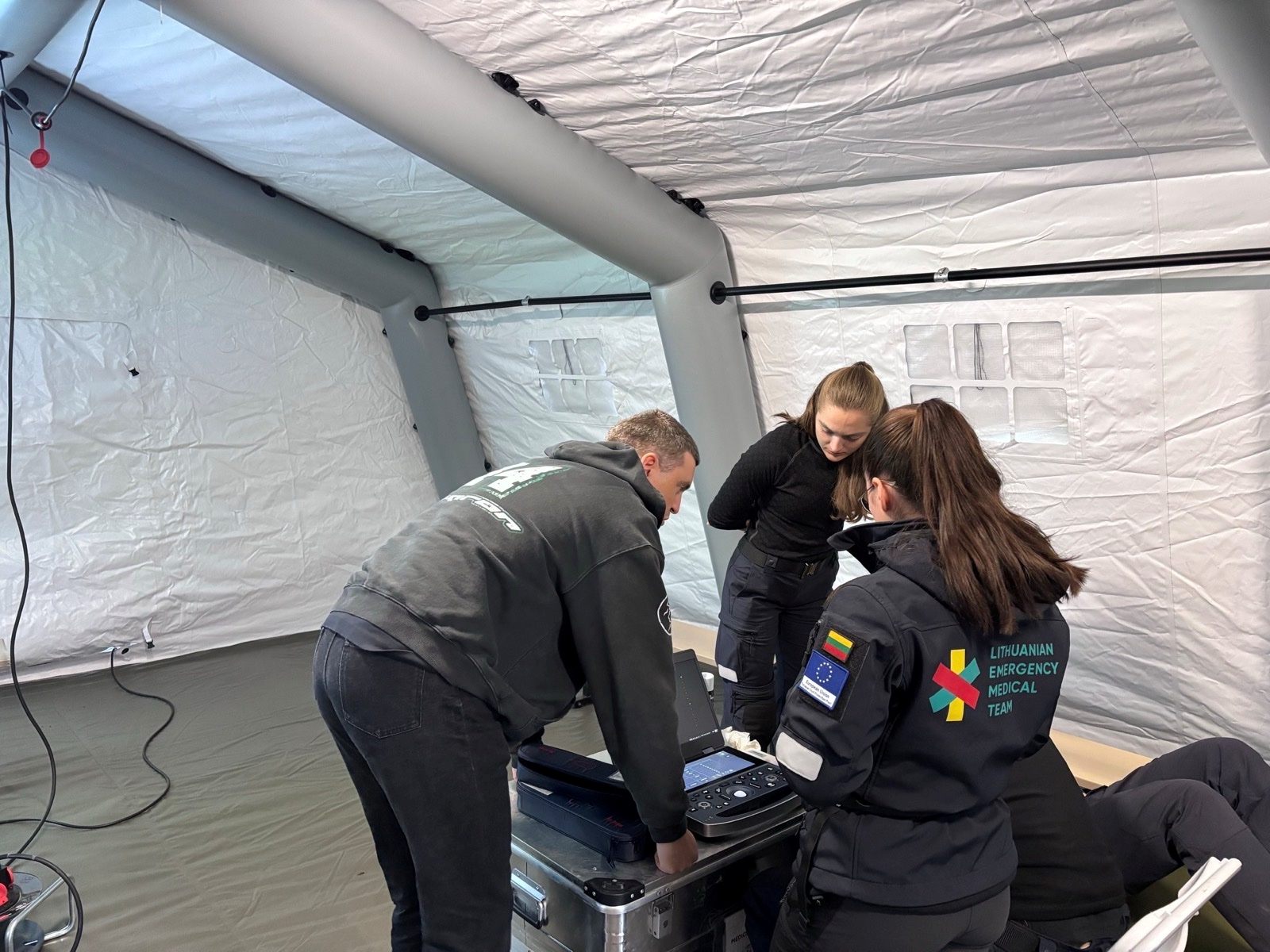
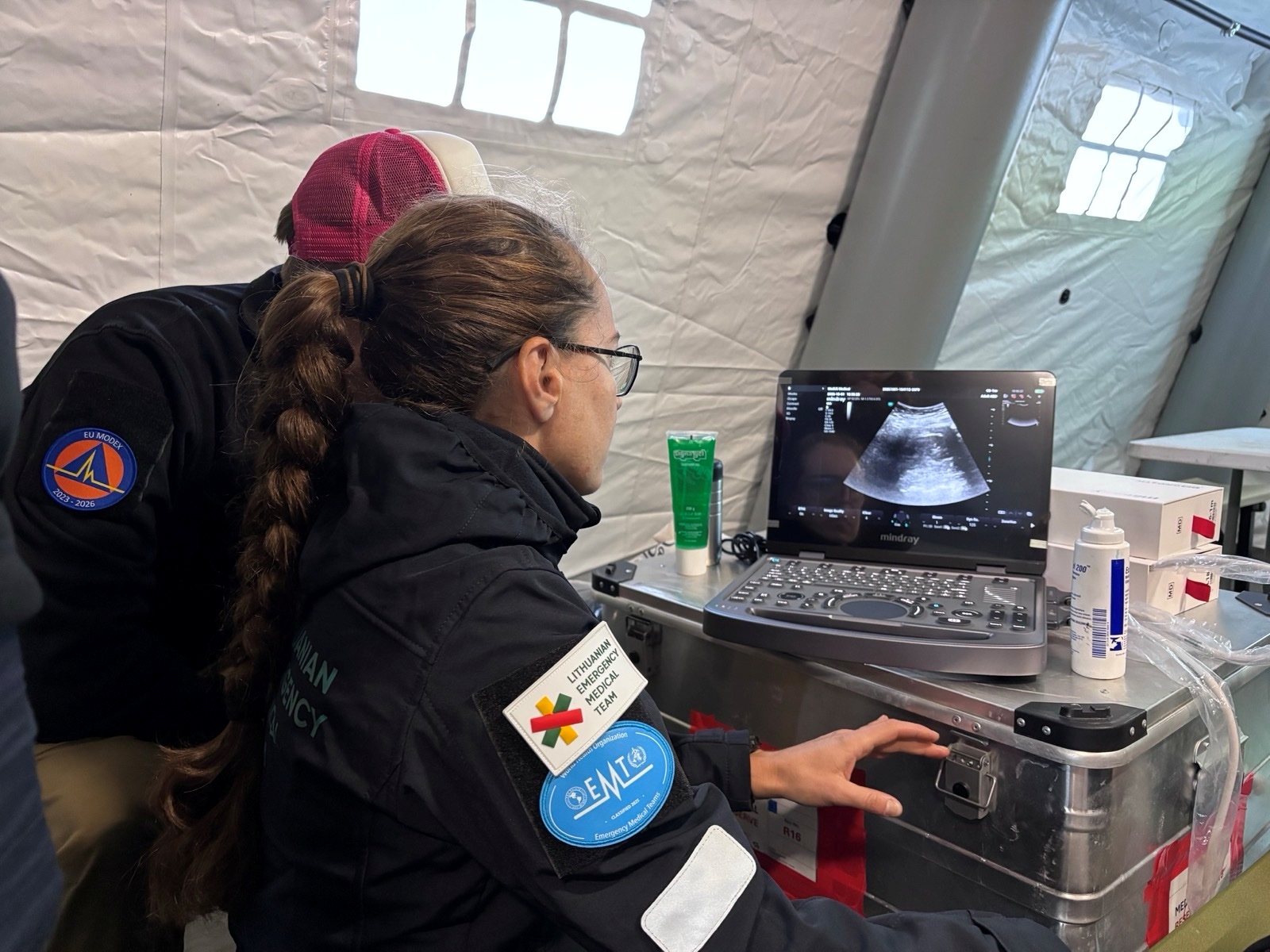 Ultrasound examination demonstration during the training seminar. Personal archive photo.
The team members also improved their knowledge in the field of water purification and testing - experienced team members shared knowledge and experience with novice - member candidates. The water taken from nearby water bodies was tested biologically and chemically, the team's water treatment equipment was cleaned and ready for team use.
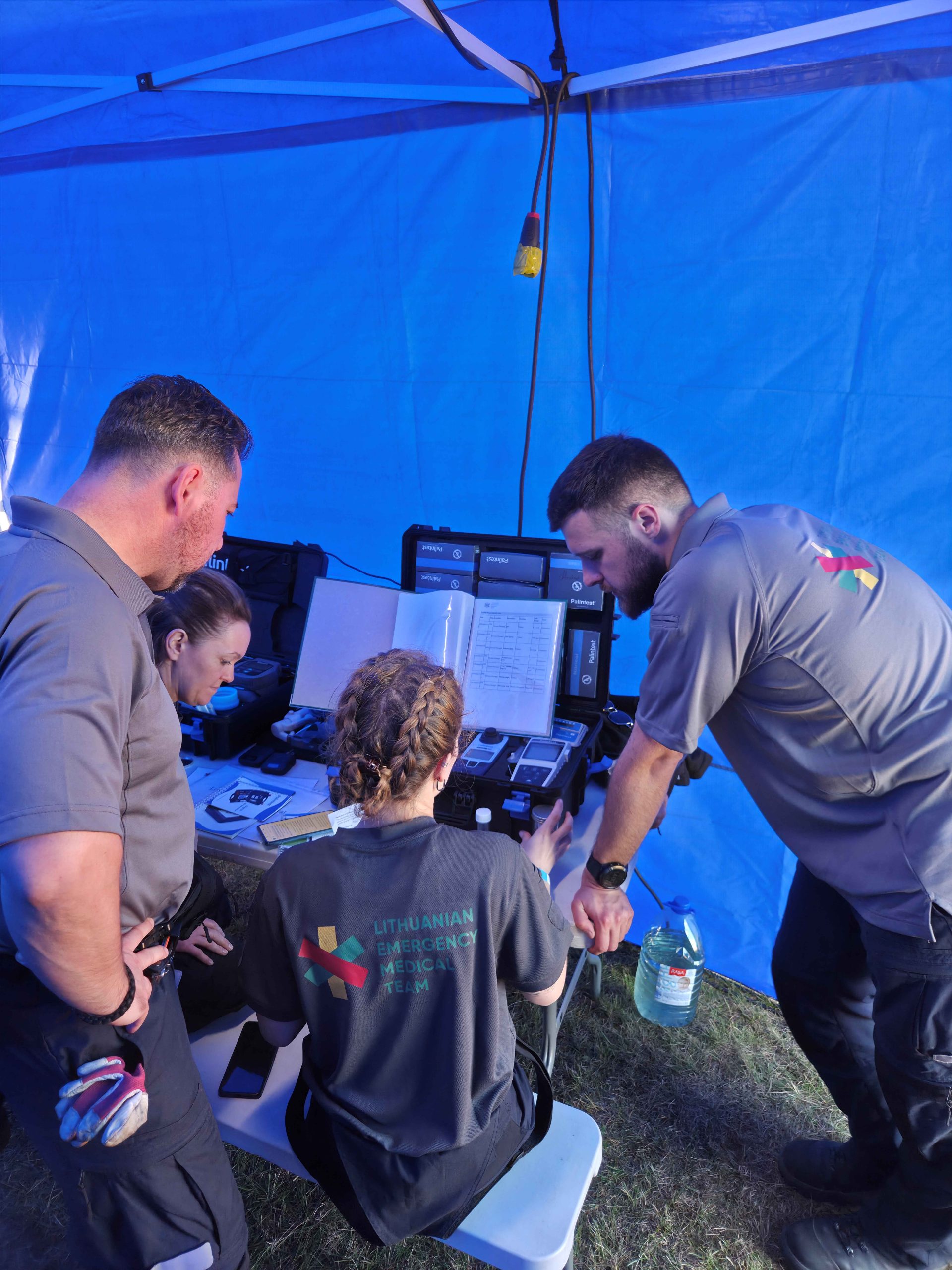 Water testing team's available equipment. Personal archive photo.
The field hospital functioned as part of a single aid chain: the arrivals were registered by the Lithuanian Red Cross volunteers, the United Nations International Organization for Migration assessed the people's movement plans and emergency needs, the State Border Guard Service and the police ensured control and public order, "Maisto bankas" - meals, while the municipality and the Fire Protection and Rescue Department (PAGD) coordinated temporary accommodation and logistics. A total of about ten non-governmental organizations with 70 representatives and about 50 PAGD, VSAT and police officers worked in the camp.
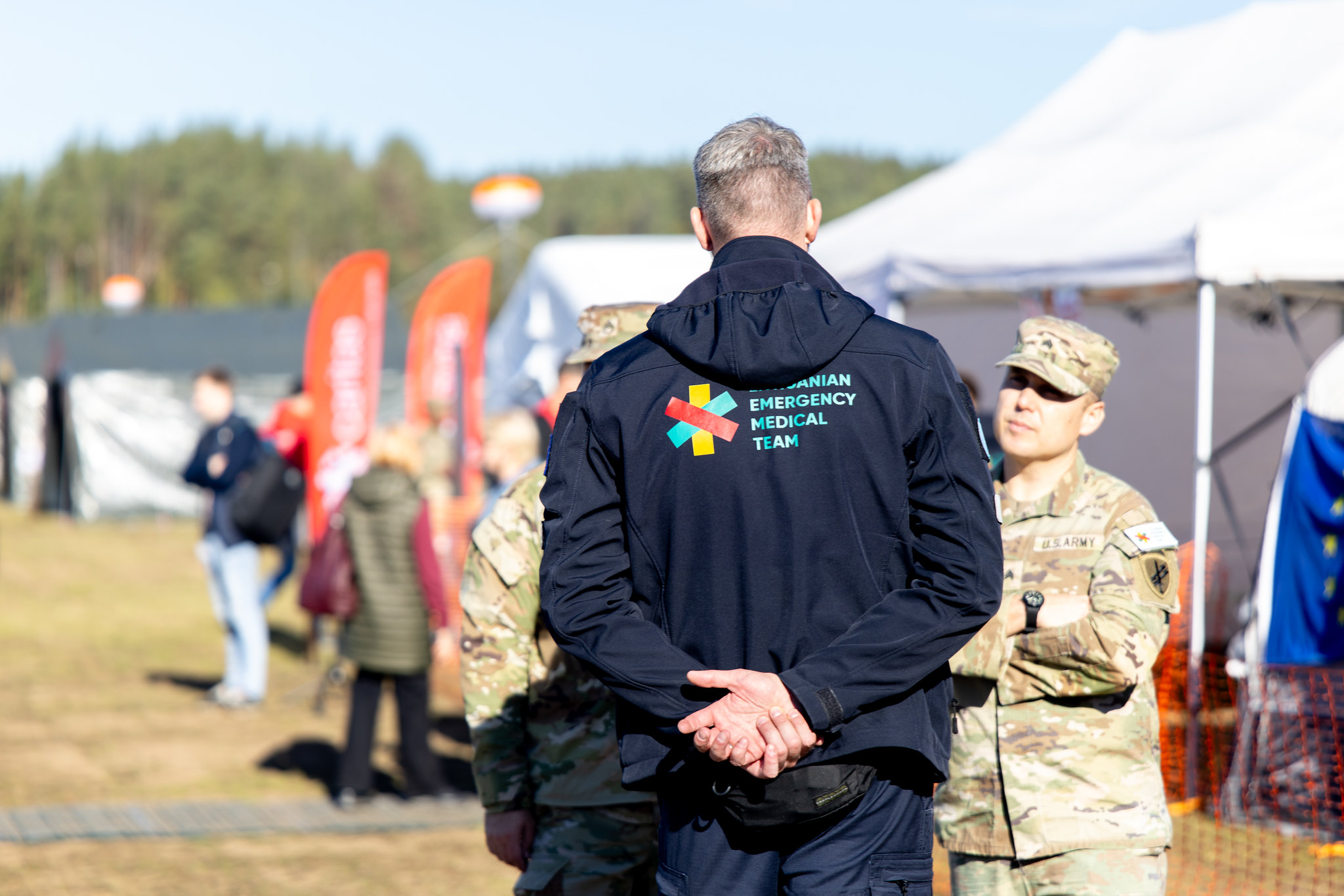 Interaction with partners in a humanitarian camp. LRV photo.
This format made it possible to check not only the team's own medical capacity, but also the place of health care in the general humanitarian aid chain - from population registration to referral to medical institutions. According to the head of PAGD, Renato Požela, the final phase made it possible to assess the supply chain of civil safety measures and the operation of the state reserve in the conditions of a humanitarian crisis.
Participation in the "Vytis Skliautas 2026" exercise allowed the team to test deployment, management of patient flows and interaction with state institutions, self-government and non-governmental organizations in the scenario of mass evacuation in real conditions. The experience gained and the observations recorded during the exercises will be used to improve the team's readiness for both national crises and international missions.
The Lithuanian Mobile Emergency Medical Service (LEMT) is certified according to the standards of the World Health Organization as a type 1 mobile team and is part of the European Civil Protection Reserve (ECPP) of the European Civil Protection Mechanism.
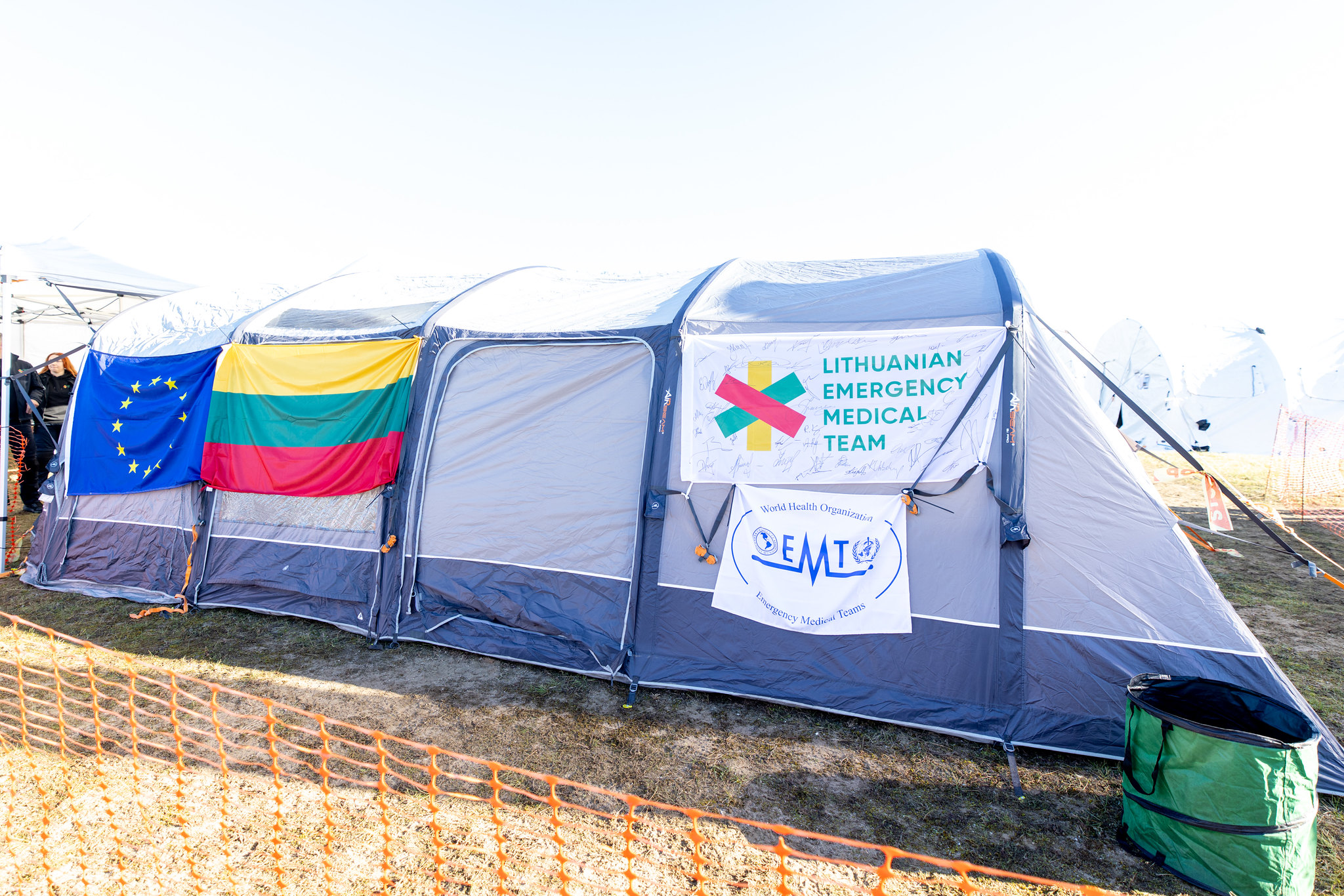 Lemt base with EU, Lithuanian flags and WHO EMT mark. LRV photo.
The team's readiness to act is also confirmed by real international experience: in 2026 in July, after the activation of the EU civil protection mechanism, the ECPP capacity was deployed in Venezuela, where medical assistance was provided to the affected population after the June earthquakes. This mission showed that the team is able to prepare, leave and work independently in the disaster area in a short time, helping people where help is most needed.
The publication was prepared as part of the project "Increasing the capacity of the Lithuanian Mobile Emergency Medical Team" partially financed by the European Union, no. 101191020, ECPP-2024-LT-EMT1.

Funded by the Europos Union. However, the expressed view or opinion is only of the author(s) and this does not necessarily reflect the views or opinions of the Europos Union or the Europos Commission. Neither the Europos Union nor the granting authority can be held responsible for them.